Home > Demo Guides > AppVolumes
Omnissa App Volumes - Notepad++ Application Lifecycle
Overview
This walkthrough demonstrates how App Volumes delivers applications dynamically using VHD-based packages, without rebuilding desktop images.
Users observe the application lifecycle and versioning behavior as it is managed centrally by IT administrators.
Access the Demo Desktop
- Open a browser and sign in to Workspace ONE at https://testdrive.us0.wss.workspaceone.com/ using TestDrive credentials.
- Go to Apps or Favorites.
-
Search for
TD-AVAoD, then click the star on that tile to add it to Favorites for faster future access. -
Launch the desktop from the tile actions menu.
- Launch from Browser is recommended for consistency in demo recordings.
- Launch from Client is acceptable when Horizon Client is already installed.
- Continue when the Windows desktop is fully visible and responsive.
Desktop Pool
Users launch desktops from:
- TD-AVAoD
Walkthrough Steps
Step 1: Launch the Desktop
Log in to the TestDrive environment and launch the desktop pool TD-AVAoD.
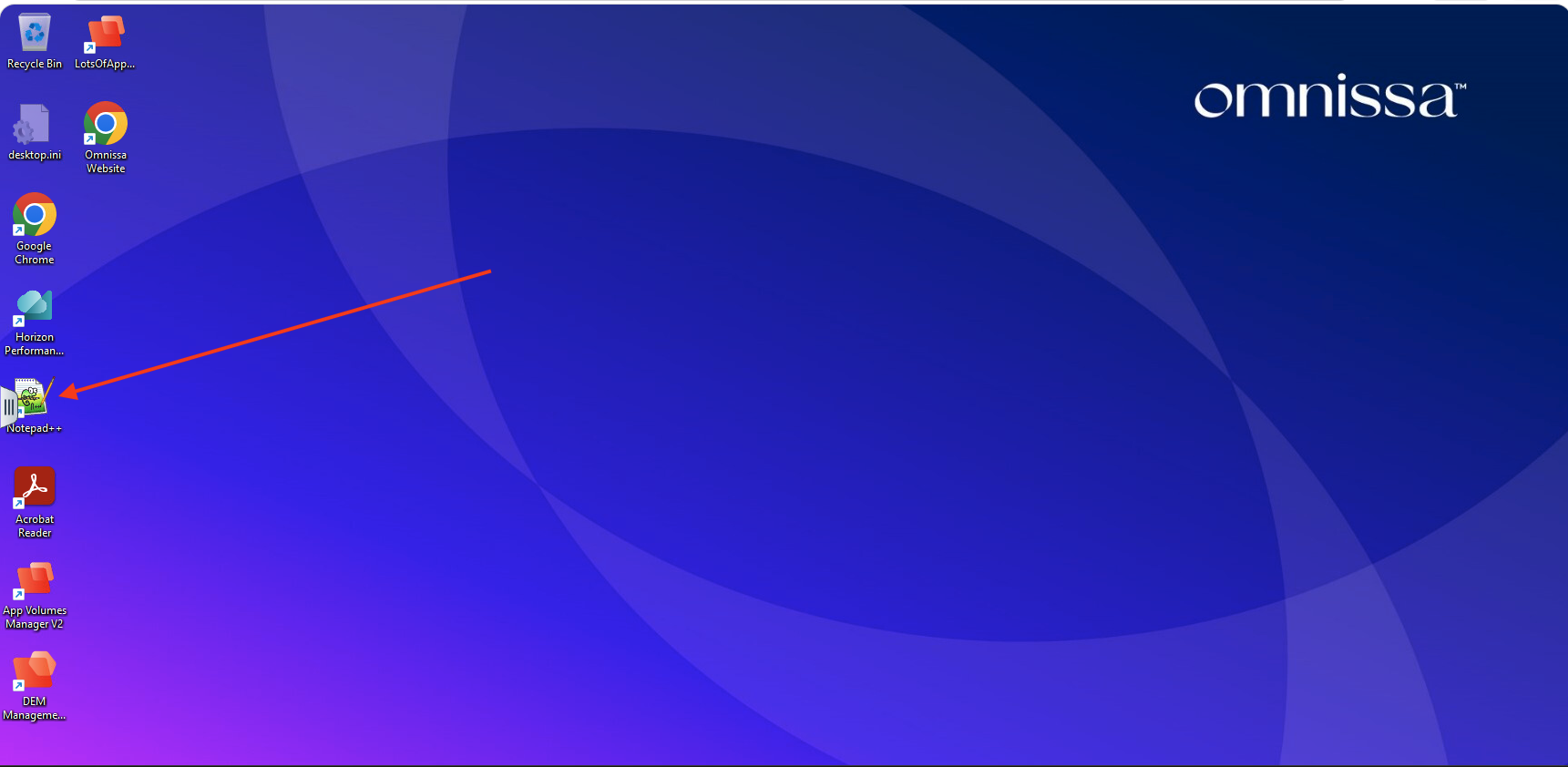
Step 2: Access the App Volumes Manager
From the desktop, locate the App Volumes Manager shortcut.
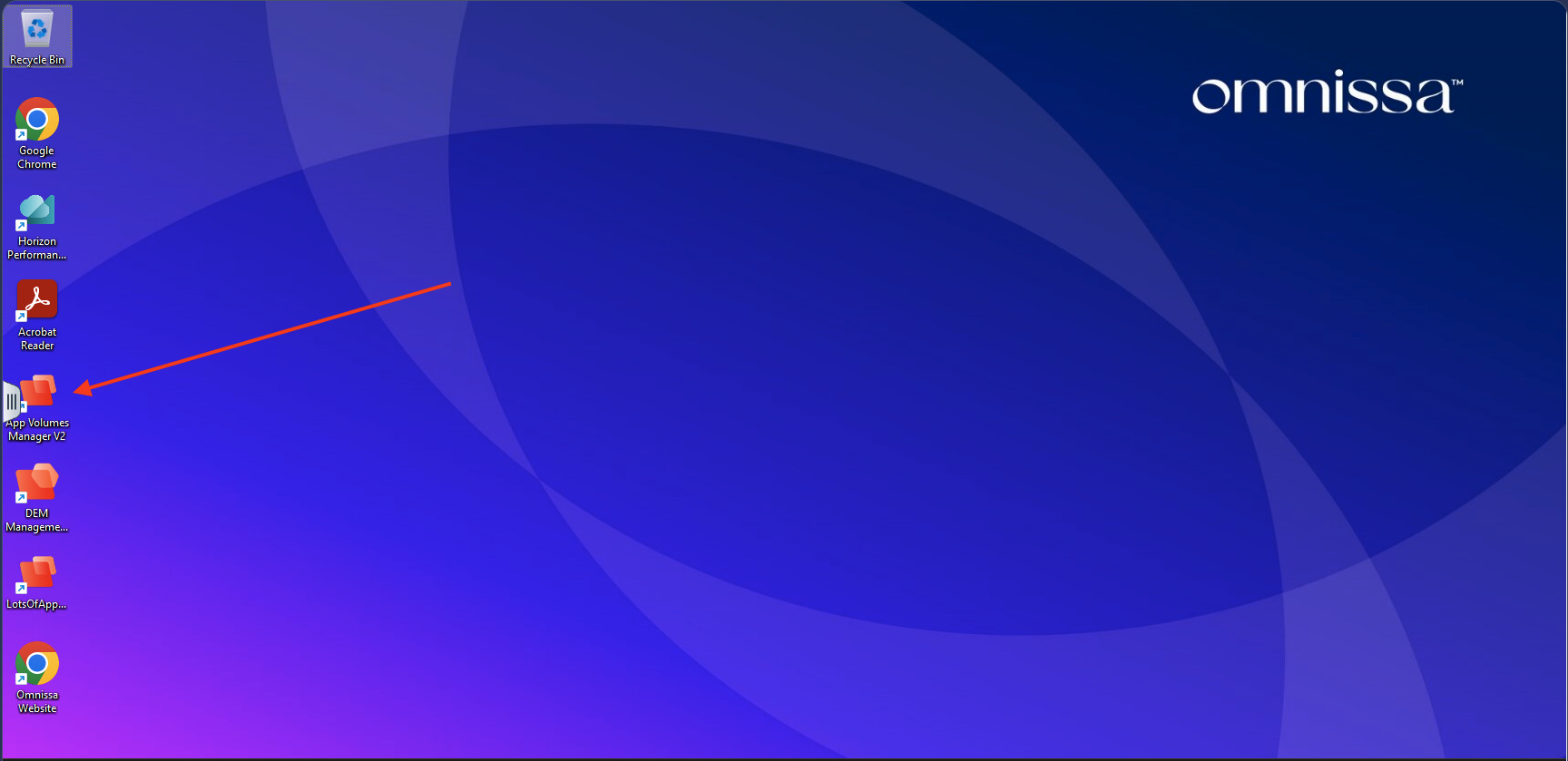
Step 3: Log In to App Volumes Manager
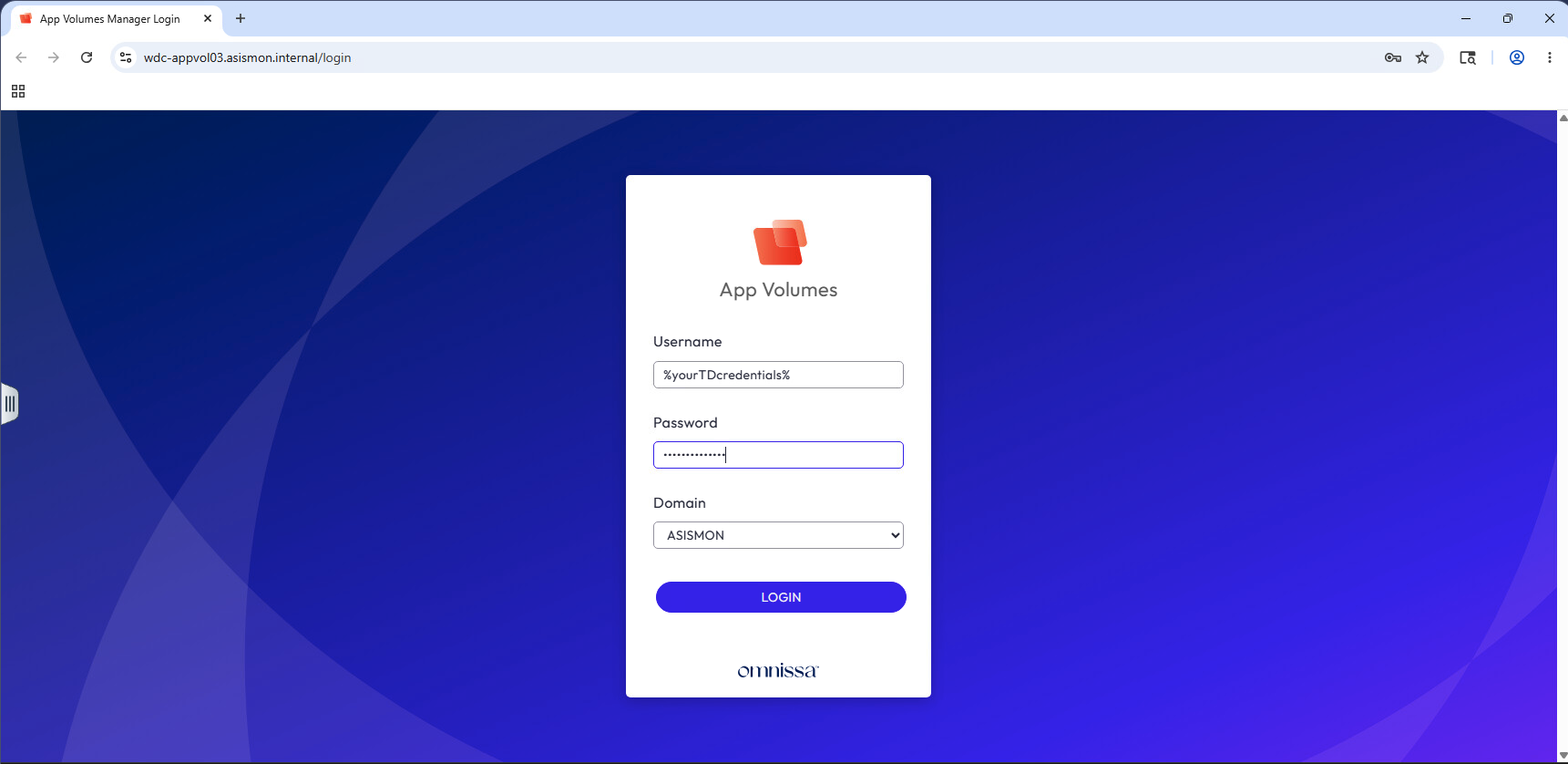
Launch App Volumes Manager, enter your TestDrive credentials in the login form, and click the Connect button.
Step 4: Launch Notepad++ (On-Demand)
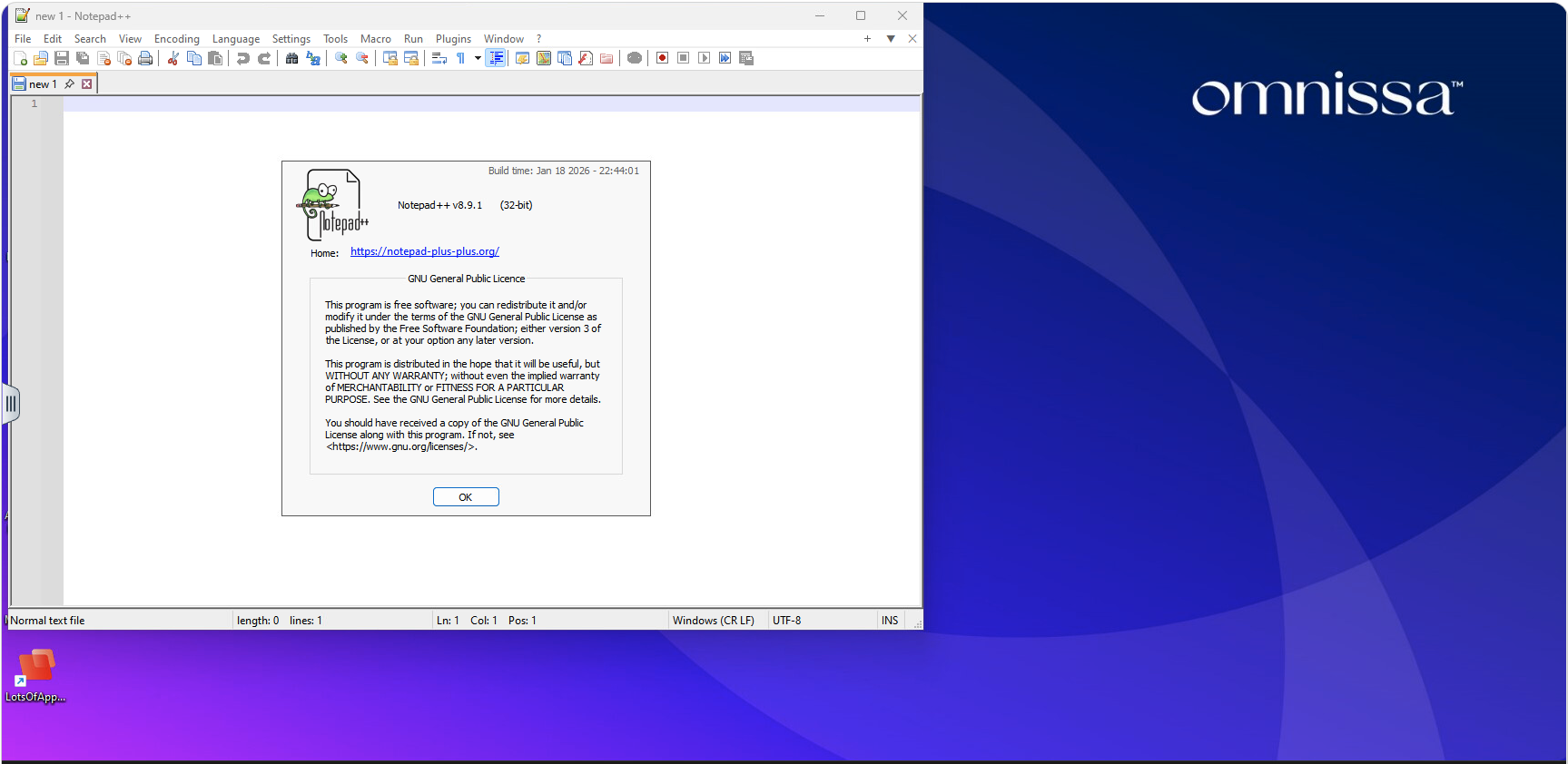
Double-click the Notepad++ icon on the desktop.
App Volumes delivers the application dynamically when it is first launched.
Step 5: Dynamic Delivery Validation (Illustrative)
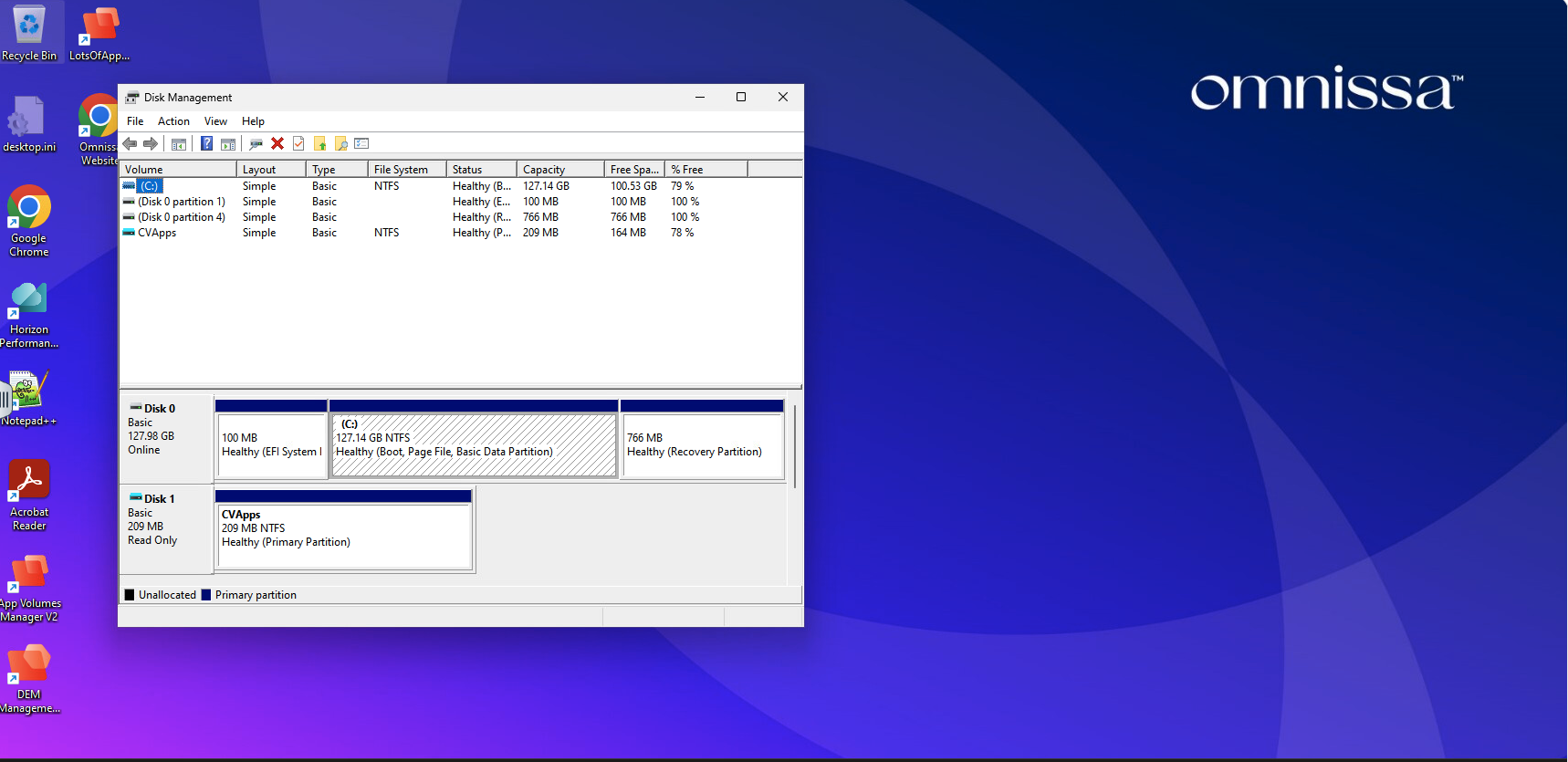
Disk Management can be used to validate that the CVApps disk is attached and read-only as part of App Volumes dynamic delivery.
This view is illustrative only and supports delivery explanation.
Step 6: Observe the Current Notepad++ Version State
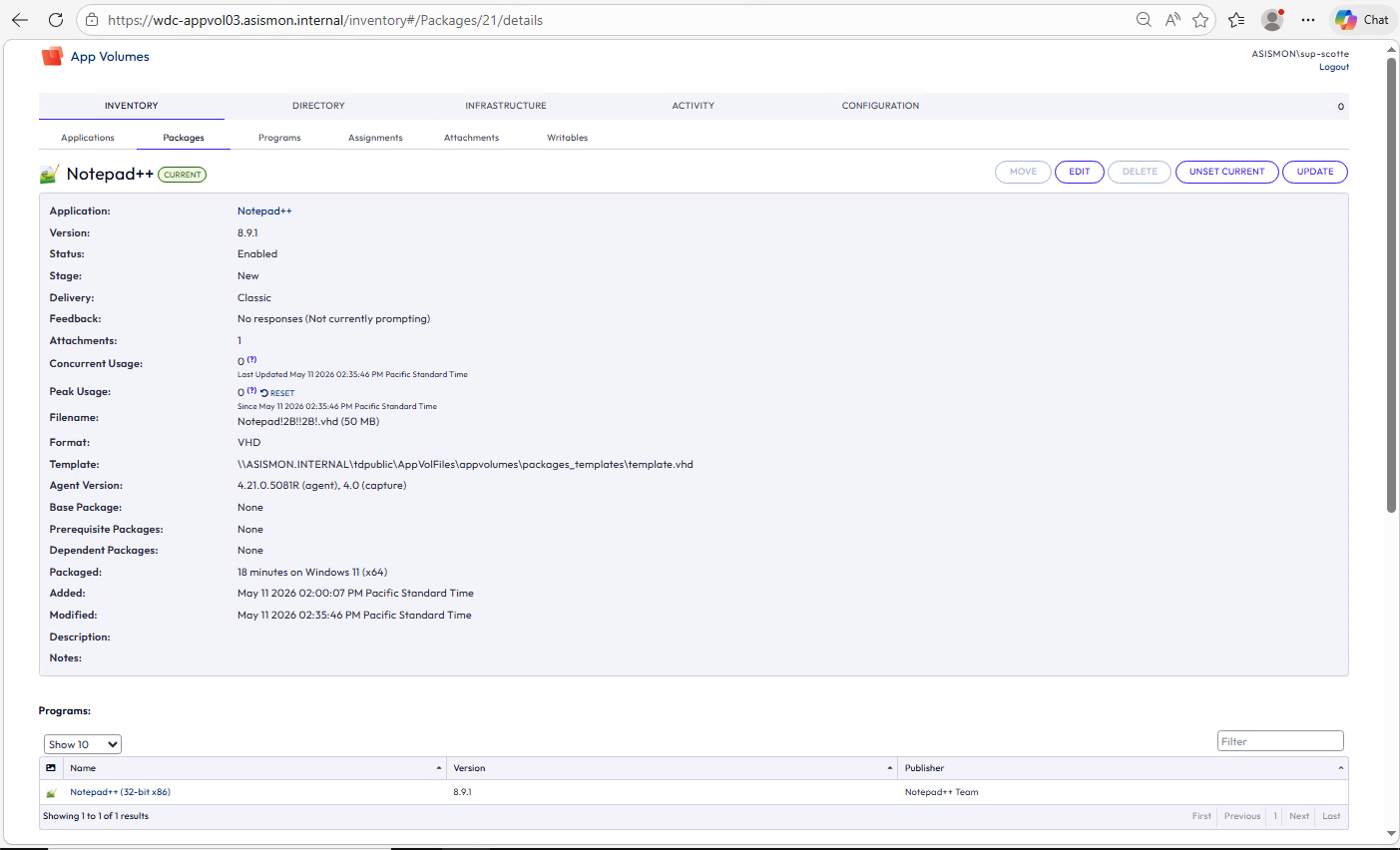
In App Volumes Applications view, note the package version currently set as Current for Notepad++.
Step 7: How Application Versions Are Managed (Illustrative)
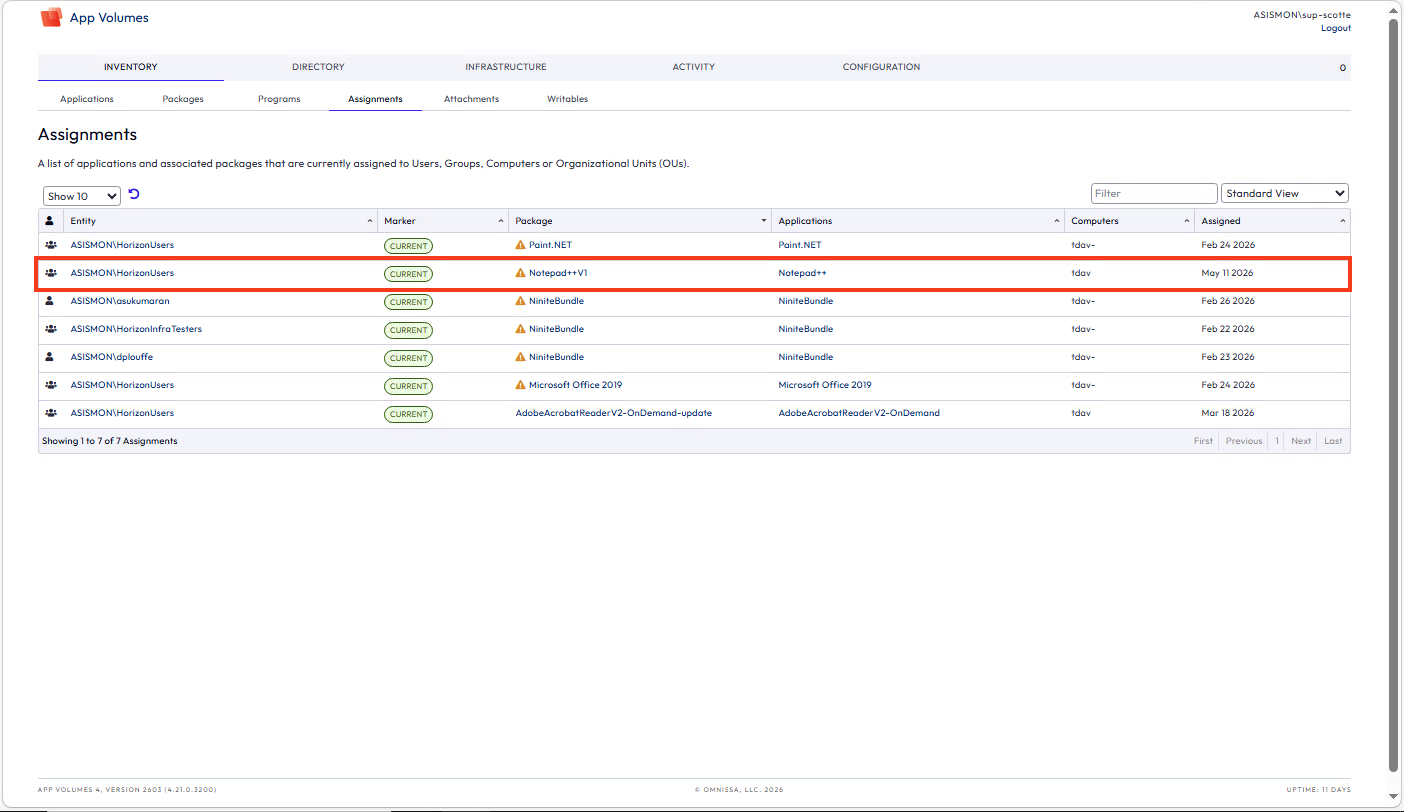
App Volumes allows administrators to manage multiple versions of an application and designate which version is active. Assignments remain targeted to the same desktop group.
This view is illustrative only. Application lifecycle actions are performed by administrators.
Step 8: Updated Version (After Admin Change)
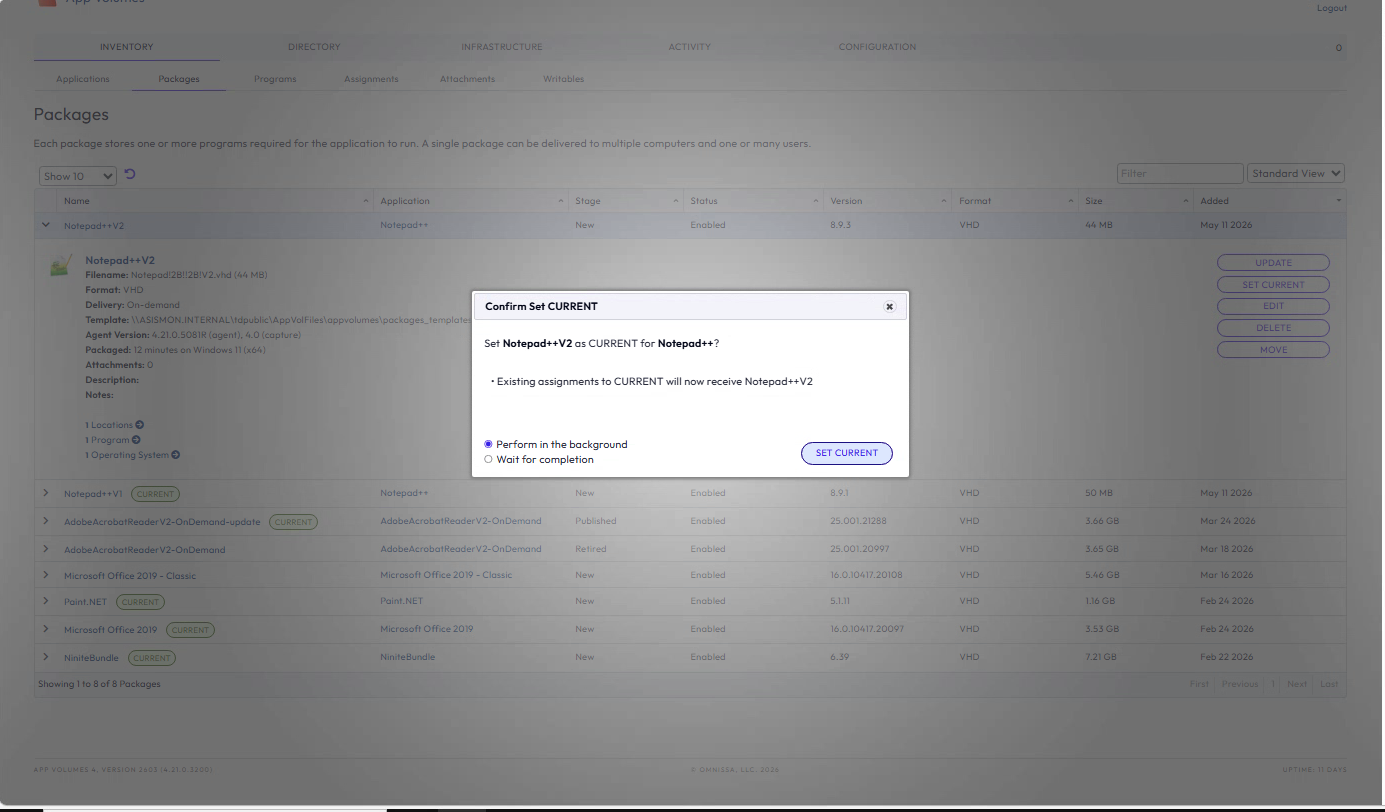
After an administrator updates the active package, users automatically receive the new version on their next login.
Key Takeaways
- Applications are delivered dynamically using App Volumes.
- Desktop images are not rebuilt or recomposed.
- Version changes are managed centrally by IT.
- Users receive updates automatically and consistently.
Summary
This walkthrough demonstrates how App Volumes decouples application lifecycle management from the desktop image, enabling faster updates with less operational overhead.